Growing Spinach
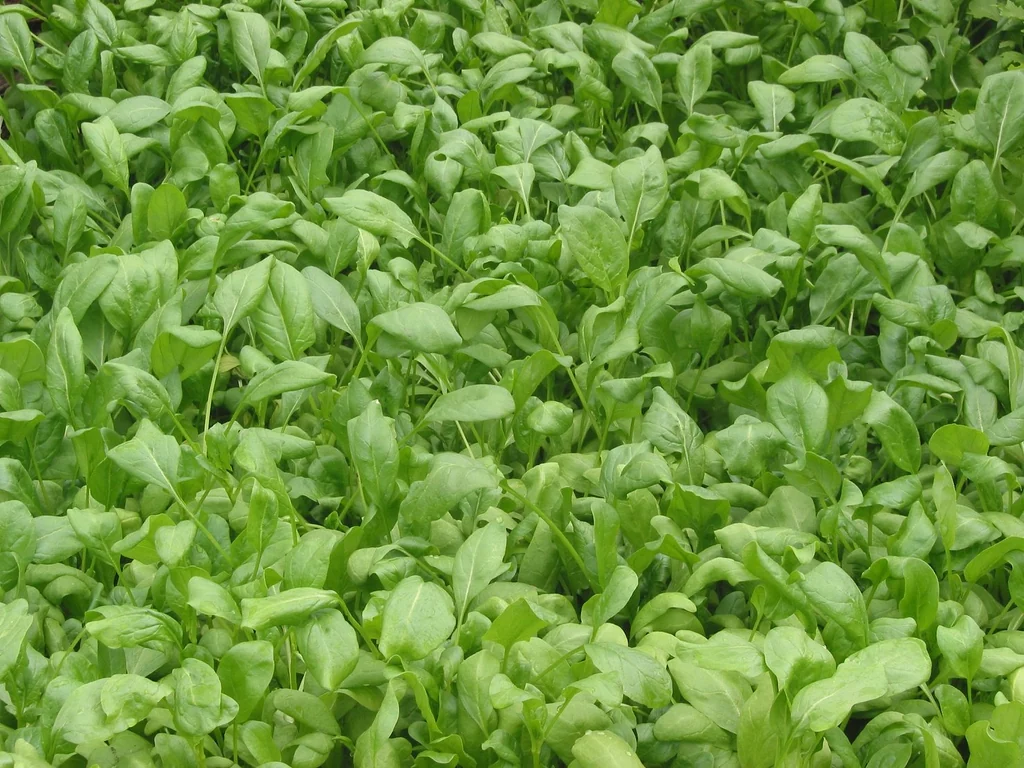
Photo details & credits
A close view of the leaf canopy. The source identifies this variety as Breedblad scherpzaad.
Photo: Rasbak · Source and botanical reference · Source image · CC BY-SA 3.0. Orientation normalized, resized and converted to WebP; no crop.
Spinach in pictures · Select a photo to look closer
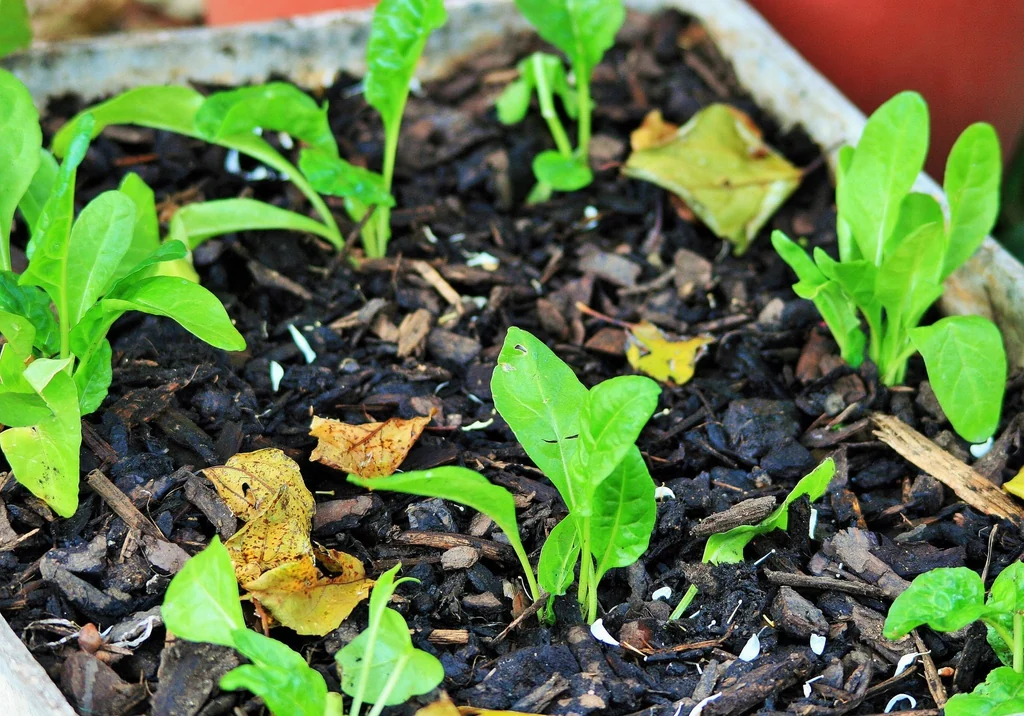
Photo details & credits
Compare the narrow seed leaves with the broader new leaves. Record leaf development when checking your own seedlings.
Photo: Lynn Greyling · Source and botanical reference · Source image · CC0. Orientation normalized, resized and converted to WebP; no crop.
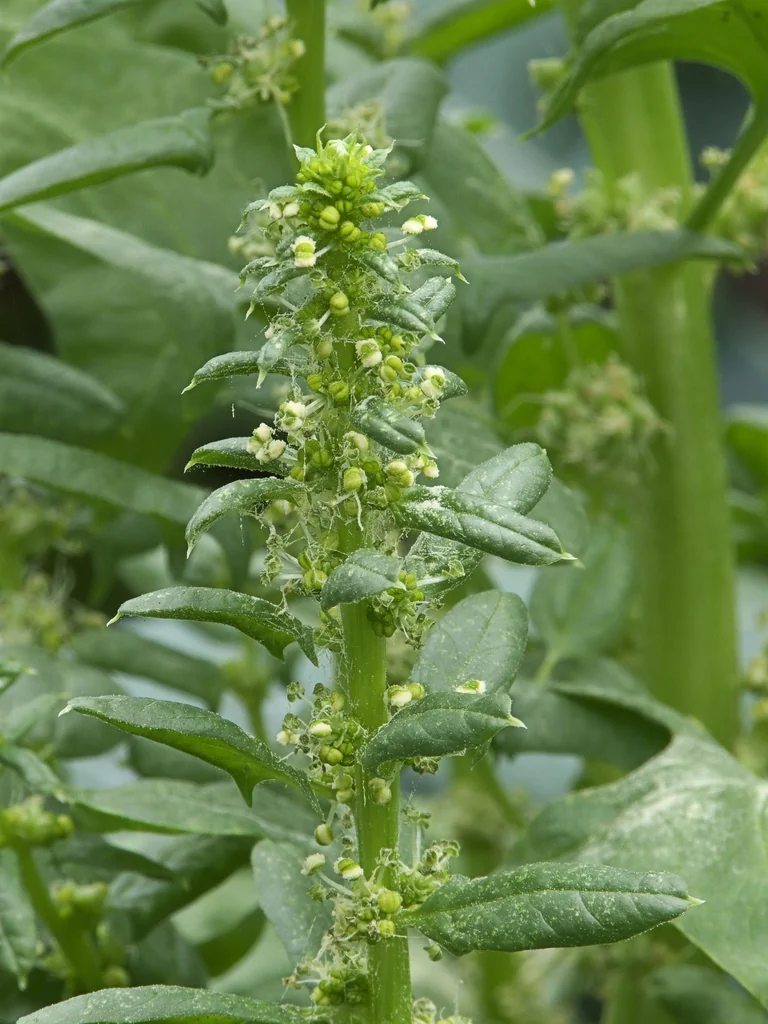
Photo details & credits
The source identifies these as male flowers. Notice the upright flowering stalk and the small flowers clustered along it.
Photo: Rasbak · Source and botanical reference · Source image · CC BY-SA 3.0. Orientation normalized, resized and converted to WebP; no crop.
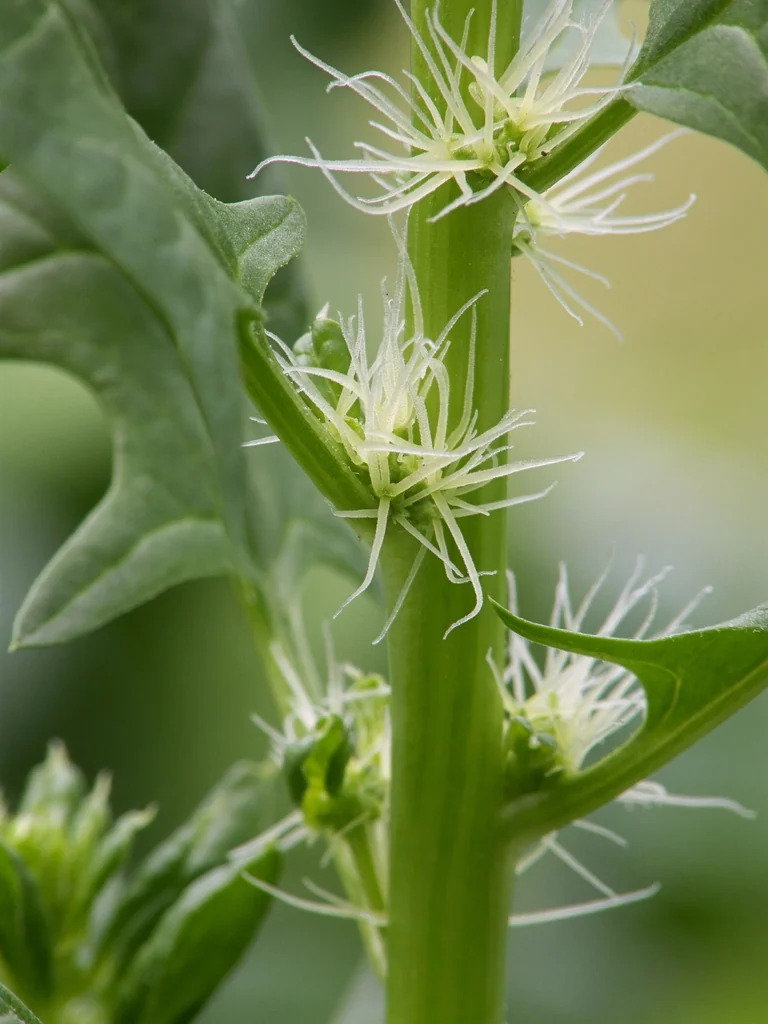
Photo details & credits
The source identifies these as female flowers. Look closely at the threadlike structures beside the leaves.
Photo: Rasbak · Source and botanical reference · Source image · CC BY-SA 3.0. Orientation normalized, resized and converted to WebP; no crop.
Spinach is excellent in cool weather and frustrating in heat.
When to plant
Put spinach in the cool part of the season. Compare early-spring and late-summer or fall sowings in your garden, allowing for the variety and local conditions. A baby-leaf harvest needs less time than a bed of full plants.
Make room for the crop
Choose the harvest style before thinning. Give full plants room to expand, or deliberately pick young plants from a denser patch. Keep a few marked plants for comparing the date of first useful leaves with the date of stem elongation.
Water
Check moisture during emergence and leaf growth, especially where the bed dries unevenly. As warmth increases, watch the center for a rising flower stalk. Record that stage and leaf quality rather than treating every smaller harvest as a fertility problem.
Harvest
Pick tender leaves. Harvest reference: University of Minnesota Extension.
Use the maturity estimate to schedule a first inspection. Let the plant’s condition and the harvest you want decide the picking date.
Common problems
Record the date of first stem elongation and compare leaf quality between sowings. Keep insect holes separate from leaf discoloration in your notes.
Use the disease-condition checklist to decide what to inspect and which cultural conditions to improve. It does not identify a pathogen from these observations.
Field notes
Sow early, harvest promptly, and use fall plantings for better quality.